Say your 200-person company needs a new payroll provider that connects to your HR system. The first thing you probably do is ask the AI assistant you already use every day, whether that’s ChatGPT, Perplexity, or Claude. Its answers have held up in your daily work. With that track record behind it, the vendors it recommends become the shortlist you research further. Most buyers now work this way: in TrustRadius’ 2026 survey, 63% of technology buyers used AI during their purchase journey.
Chatbots have become a main route to information for buyers. The Answer Engine Optimization (AEO) best practices below show how a brand earns that place, and each carries an evidence grade so you can judge how much proof supports a tactic before committing time to it.
Mission SEO flags where evidence is correlational or thin, and we didn’t run controlled experiments of our own.
What is Answer Engine Optimization (AEO)?
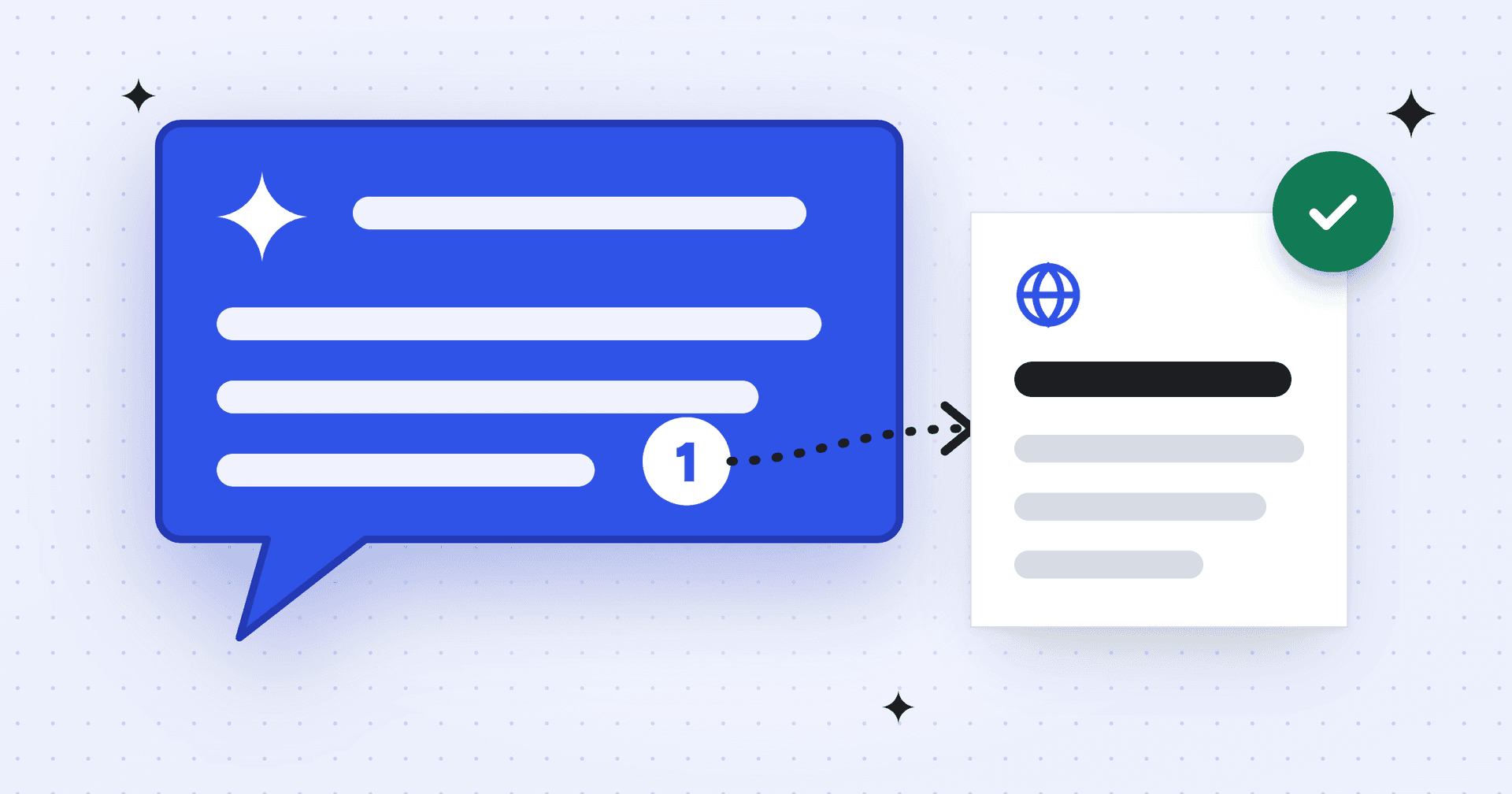
Answer Engine Optimization (AEO) is the work of getting your brand cited when buyers put a question to ChatGPT, Perplexity, Gemini, or Google’s AI Overviews and AI Mode. The engine writes one answer and links a handful of pages, which earn the mention.
Google says AI Overviews and AI Mode use a “query fan-out” technique, running several related searches across subtopics before writing a response, a process that can surface pages ranking for queries you never targeted from a single buyer question.
AEO vs SEO vs GEO: What’s the difference?
SEO, AEO, and GEO share a technical foundation and differ in their success metrics. SEO teams track rankings and the clicks they bring. For AEO, the number that matters is citations: whether a featured snippet, voice assistant, or AI tool such as ChatGPT names your brand or links your page when it answers a buyer’s question. Generative Engine Optimization (GEO), a term from a 2023 paper presented at KDD 2024, covers the generative AI side of AEO, and many marketers now use the two terms interchangeably.
Google’s Search Central documentation confirms that SEO best practices still apply to AI features, so the crawlable, indexed pages and clear site structure an SEO team already maintains carry straight over to AEO. The extra work involves writing passages an engine can quote and earning mentions on other sites, both covered in the practices below.
SEO, AEO and GEO compared
Factor
SEO
AEO
GEO
Goal
Rank a page in search results
Be the source an engine uses for a direct answer
Increase a source’s visibility inside AI-generated responses
Unit of optimization
The page
The passage or answer block
The passage, measured by its share of the answer
Success metric
Rankings, clicks, organic traffic
Citations, mentions, AI referral conversions
Visibility metrics such as position-adjusted word count
Where results appear
Google and Bing results pages
AI Overviews, AI Mode, ChatGPT, Perplexity, featured snippets
Generative engines such as ChatGPT, Perplexity and AI Overviews
Why AEO matters for B2B brands
At its I/O conference in May 2026, Alphabet reported that AI Overviews has more than 2.5 billion monthly users and AI Mode passed 1 billion within about a year of launch. The Gemini app reached more than 900 million monthly users over the same period.
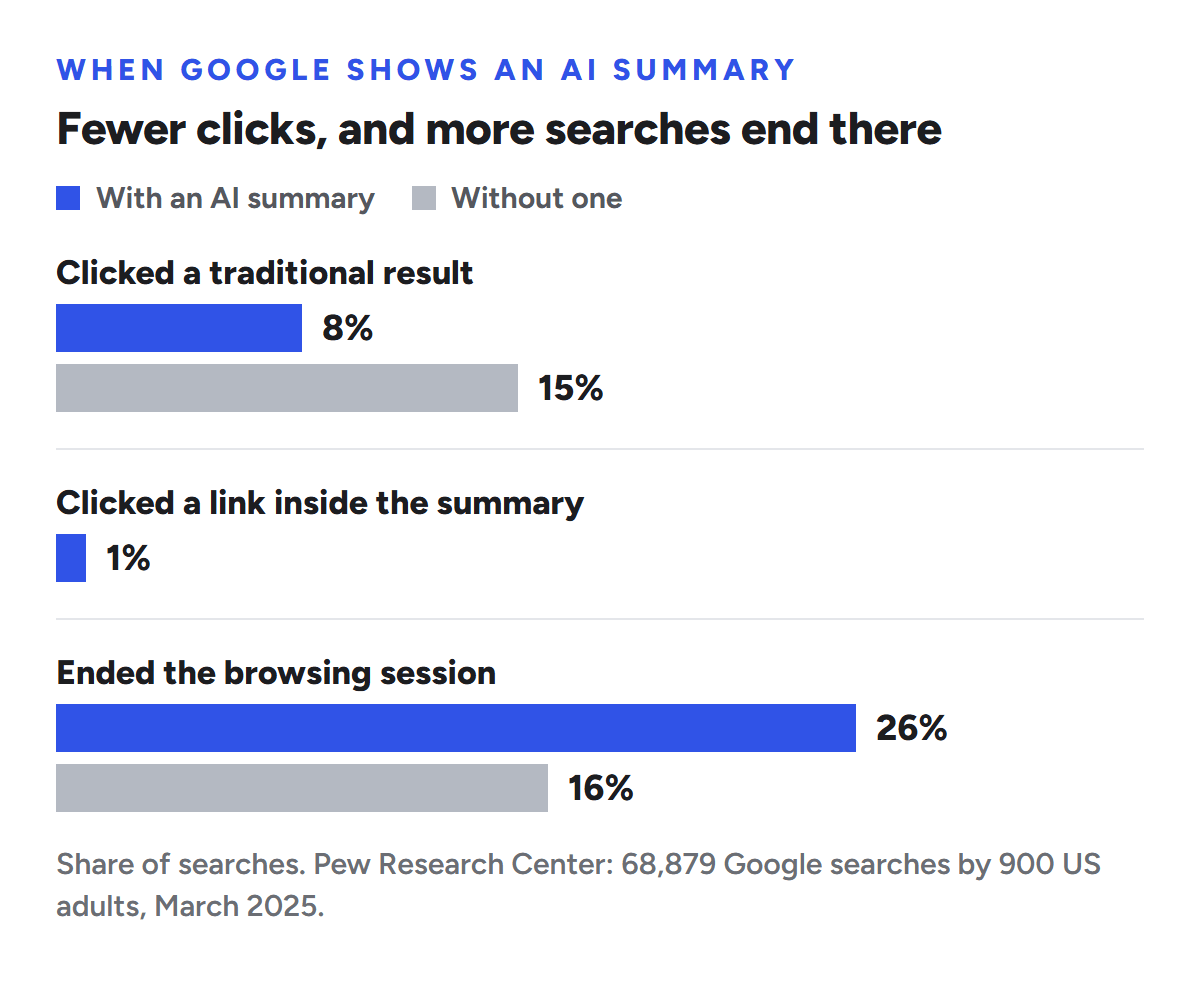
Pew Research Center analyzed 68,879 Google searches by 900 US adults in March 2025. Users clicked a traditional result on 8% of searches that showed an AI summary, compared with 15% without one, and clicked a link inside the summary only 1% of the time. Summaries also ended more browsing sessions: 26% of searches with one closed the session, against 16% of searches without. Bain estimates that zero-click behavior cuts organic web traffic by 15% to 25%. For B2B brands, this means many buyers now form a first impression from the summary itself. A citation in that summary keeps a brand visible during searches that end without a click.
With an AI summary on the page, clicks on traditional results nearly halve, and more searches end the browsing session.
In Responsive’s 2025 buyer survey of 350 B2B buyers, 80% of technology buyers used generative AI at least as much as search for vendor research, and a quarter of all respondents now use it more than search.
In a Microsoft Clarity study of publisher and news sites, AI referrals made up less than 1% of traffic, and visitors from AI assistants signed up at 1.66%, roughly 11 times the 0.15% rate from search. Because the sites studied are mostly publishers, B2B teams should treat the result as a directional signal and check it against their own analytics.
How we graded these practices
We drew on peer-reviewed research, large-scale studies from SEO data providers, and official documentation from Google and OpenAI, all published within the last three years. Each practice gets one of three labels:
Study-backed: supported by a controlled experiment or a large dataset (correlational studies are marked)
Platform-documented: stated in the engine’s own documentation
Practitioner consensus: widely recommended, consistent with how engines describe their systems and awaiting a controlled test
The order shows what to fix first, and crawler access leads because every other practice depends on it.
7 AEO best practices that work
The seven practices follow the order in which they should be implemented, from the technical fixes that every later step relies on to the tracking that shows whether the work paid off. The table below lists each one’s evidence grade and effort, and the sections that follow explain how to apply them.
Per OpenAI’s crawler documentation, sites that opt out of OAI-SearchBot won’t appear in ChatGPT search answers, and blocking GPTBot keeps content out of model training. On Google, a page must be indexed and eligible for a snippet before it can appear in AI Overviews or AI Mode, as our guide on how to rank in AI Overviews explains.
Cloudflare found that 37% of the top 10,000 domains on its network had a robots.txt file. Its June 2025 crawl data put Google at about 14 crawls per referral sent and OpenAI at about 1,700.
Allow the search crawlers you want citations from, and block training bots separately if needed
Check that firewall and CDN rules aren’t blocking those bots by default
Review server logs monthly for OAI-SearchBot and Googlebot activity on key pages
Not sure what your robots rules let through? Our technical SEO services find what is blocking crawling, rendering, and indexing, fix it inside your stack, and keep it fixed, release after release.
2. Lead every section with the answer
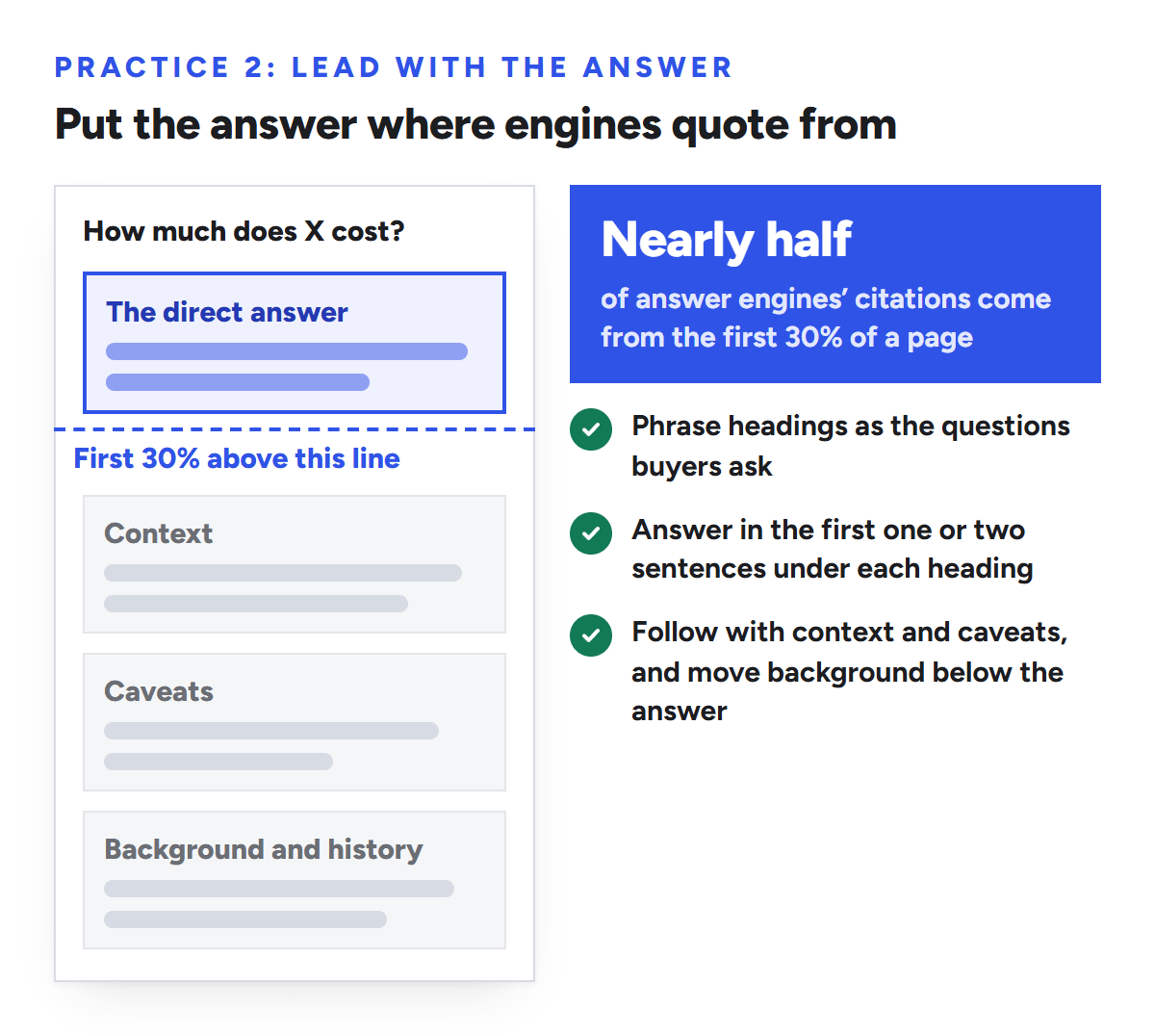
Answer engines pull nearly half their citations from the first 30% of a page. Put the direct answer in the first one or two sentences under each heading, then follow it with context and caveats.
Put the direct answer first: nearly half of citations come from the first 30% of a page.
Move background and history below the answer
Phrase headings as the questions buyers ask
3. Write passages that stand alone when quoted
A quoted paragraph reaches the reader without the rest of your page, so each paragraph should stand alone and make sense without context from the ones around it. In practice, that means naming the subject at the start of each paragraph, defining terms on first use, and writing headings specific enough that an engine can tell what each section covers.
Rewrite any paragraph that only makes sense after the one above it
Give each likely follow-up question its own heading
4. Add original data and cite your sources
In the GEO paper presented at KDD 2024, researchers tested different ways of rewriting content to see which ones got it cited more often in AI-generated answers. Adding statistics, quotations from relevant sources, and citations produced the largest gains, lifting a source’s visibility in generative engine responses by up to 40%.
Original data gives engines a specific fact to cite, and other sites reference it too, which feeds practice 5. Placing each statistic in the same sentence as its source link lets an engine lift both together.
Publish at least one proprietary number on each key page, such as a customer benchmark or survey result
Cite the original source and year for every third-party statistic
5. Earn mentions on third-party sites
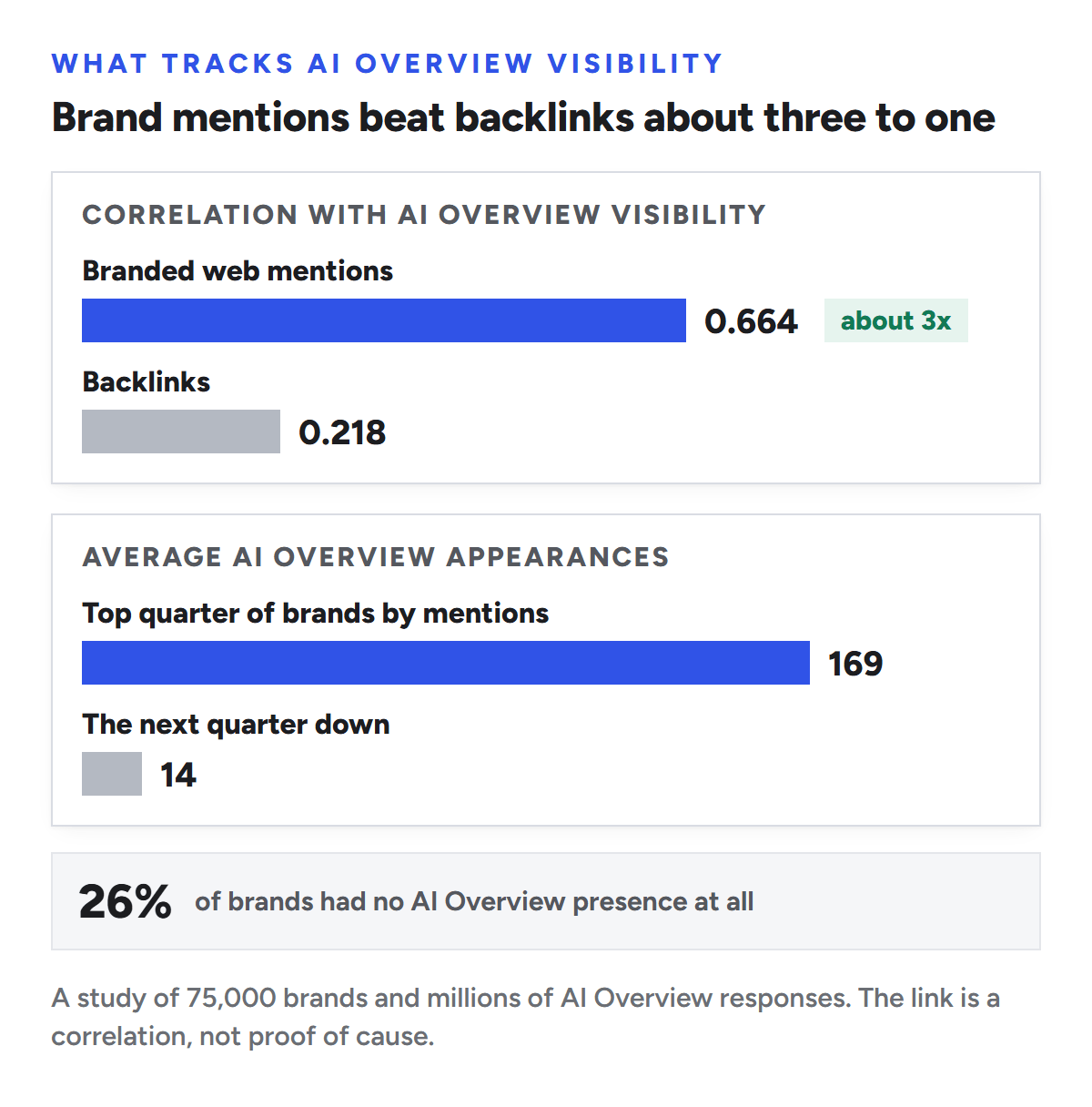
In a brand visibility study of 75,000 brands and millions of AI Overview responses, branded web mentions had the strongest correlation with AI Overview visibility at 0.664, roughly three times the 0.218 for backlinks. The top quarter of brands by that measure averaged 169 AI Overview appearances, more than 10 times the 14 averaged by the next quarter down, and 26% of brands had no AI Overview presence at all.
Mentions on other sites track AI Overview visibility about three times as closely as backlinks. The study is correlational.
The study is correlational, and well-known brands tend to earn both mentions and citations. Buyer research points the same way: TrustRadius found 74% of buyers use reviews to inform purchase decisions.
Keep review profiles current on the sites your buyers check
Pitch your original data to industry publications and newsletters
Track unlinked brand mentions as a KPI next to backlinks
6. Keep pages fresh and brand facts consistent
A 2025 study found that across 17 million citations from ChatGPT, Perplexity, Gemini, Copilot, and AI Overviews, cited URLs averaged 1,064 days old, compared with 1,432 days for pages in organic results, which makes them 25.7% fresher. Google’s AI Overviews cited sources 16 days older than the organic average.
A useful refresh updates what a page says. Consistency is practitioner consensus: describing your product the same way on your pricing page and review profiles gives engines one set of facts to cite.
Update figures and screenshots on your top commercial pages every 90 days
Audit product names and pricing across your site and listings each quarter
Show a visible last-updated date whenever the content changes
7. Track AI citations and referral conversions
Search Console added Generative AI performance reports on June 3, 2026. They show how often your URLs appear in AI Overviews and AI Mode, broken down by page, country, device, and date.
For assistants Search Console doesn’t cover, such as ChatGPT and Perplexity, track referral sessions by source in your analytics and run a fixed set of buyer prompts on a schedule. Our SaaS keyword research guide shows how to write them, three to five per keyword cluster.
Group AI referrers into one analytics channel and track their conversion rate
Log which brands get cited for 20 to 50 priority prompts each month
If your AI referrals convert below your organic search rate, check the landing pages those visitors reach first.
Four AEO metrics and the tool that reports each
Metric
What it tells you
Where to get it
AI engines included
AI Overviews and AI Mode impressions
How often Google shows your pages in its AI answers
Search Console Generative AI report
Google AI Overviews, AI Mode
AI referral visits and conversions
How many visitors AI assistants send, and how many convert
Your analytics tool, with AI referrers grouped into one channel
ChatGPT, Perplexity, Gemini, Copilot
Citation share
How often your brand is cited for the buyer questions you track
A spreadsheet logging answers to the same 20 to 50 prompts each month
Any engine you run the prompts in
Branded web mentions
How often other sites mention your brand
A mention-tracking tool
None (third-party sites)
Would you rather not run the prompts yourself? Our SEO for B2B SaaS program tracks the prompts that decide shortlists every week and reports your share of voice across ChatGPT, Gemini, and Claude against the rivals buyers compare you with, prompt by prompt.
AEO practices that don’t work
Three tactics appear in many AEO checklists with little data behind them. Each has either shown no measurable effect when tested or is not required by the platforms themselves. Teams can drop all three from their AEO plans.
llms.txt files. llms.txt is a proposed Markdown file meant to point AI models to a site’s key content. Google’s AI optimization guide states that site owners don’t need machine-readable AI files, AI text files, or Markdown to appear in its generative AI search. Publishing one does no harm, but it also has no measured effect on citations. It does matter to Lighthouse’s agentic browsing score, which fails a soft 404 or a slow reply at /llms.txt but ignores a plain 404.
Keyword stuffing for AI. Microsoft’s rewritten Bing guidelines now classify keyword stuffing and language engineered to trigger AI citations as abuse, covering Copilot answers as well as rankings. Engines reward specific, sourced information.
Schema as a ranking switch. In a controlled study, researchers found that adding JSON-LD schema to pages produced no meaningful citation gains in AI Mode or ChatGPT. AI Overview citations for those pages even dipped 4.6% against a control group of similar pages without schema. Use schema that matches visible content, such as Article, FAQPage, and Organization, as a supporting signal for search engines.
Want an AEO plan built on what holds up? Every SEO consulting engagement tracks how AI assistants describe and recommend you, and the roadmap includes the changes that get you cited, from how pages are structured to where your brand is mentioned. The first call is free, and before it we check your rankings, technical health, and AI visibility: book a time with a senior consultant.
Frequently asked questions
How long does AEO take to show results?
Technical fixes act quickly: OpenAI’s crawler documentation notes that robots.txt changes take about 24 hours to reach its search results. Content updates depend on how often each engine recrawls the page, and off-site authority from mentions and reviews builds over months. A quarterly review cycle gives enough data to see whether citations and AI referrals are moving.
How do you track AI referral traffic in Google Analytics?
GA4 now sorts visits from ChatGPT, Gemini, DeepSeek, Copilot, and Grok into a built-in AI Assistant channel, according to Google Analytics Help. Visits from Google’s AI Overviews and AI Mode fall outside it and appear under Organic Search, which is why Search Console’s Generative AI report is the place to measure them.
Can small or new sites get cited by AI engines?
Yes. A 2025 citation study found that about 68% of pages cited in AI Overviews didn’t rank in Google’s top 10 for the query or any of its fan-out queries. Smaller sites can compete on sourced answers and original data while they build third-party mentions.
Disclaimer: Sources and figures checked October 15, 2026. AI search platforms change features and documentation often, so confirm details with each one before acting on them.
We’re a B2B SEO and AEO agency. Book a free 30-minute call with a senior consultant: we look at your site before we talk, so you leave knowing what to fix first.


 best project management software